
Disclosure: Tripvio published this article. Tripvio helps organize shared trip expenses; it does not provide financial, tax, payment, or settlement guarantees. Review entries, receipts, currency choices, and splits with the people involved.
1. Agree on the ground rules early
Before the first large booking, talk about the basics: which costs are shared, whether everyone splits equally, and how personal upgrades will be handled. A hotel room, group meal, or car rental may involve a different set of people than an optional tour. The agreement matters more than the math.
2. Keep bookings separate from actual expenses
Booking details can help the group understand what was reserved, but a confirmation cost line is not automatically a wallet expense row. In Tripvio, eligible booking-email information can inform the plan; record actual shared expenses deliberately when they are paid and decide the split with the relevant collaborators. This avoids presenting an estimate or reservation total as a settled debt.
3. Record costs while the context is fresh
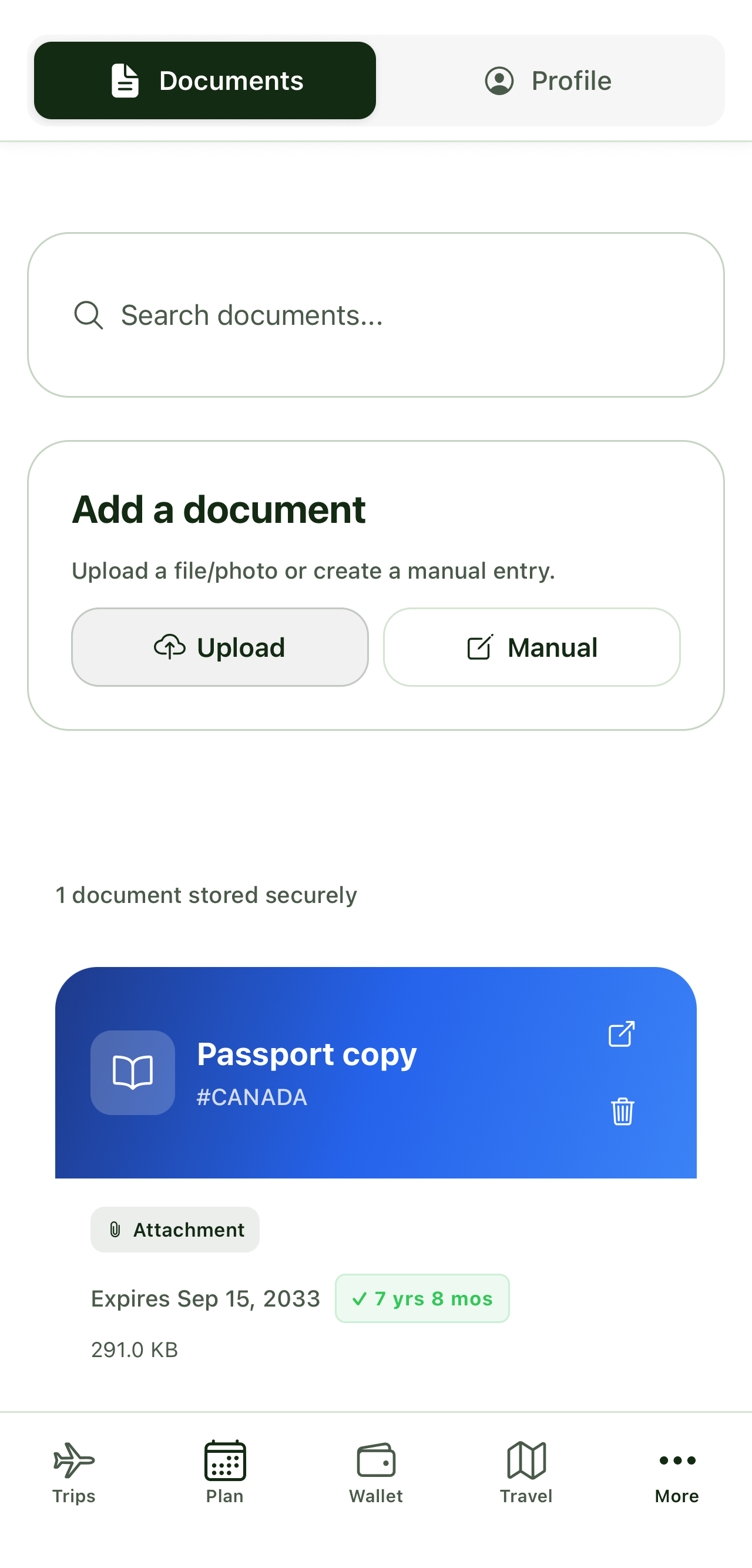
Add a shared expense close to the purchase, while everyone remembers what it was for and who participated. Use a clear description and keep a receipt or booking copy when useful. If you need to revisit the plan, Tripvio’s document hub can keep relevant records with the trip, including manually added files and OCR-assisted smart uploads. Check OCR-extracted information against the source.
4. Review the split with the people involved
Travel groups change day by day: someone may skip a meal, join a tour late, or pay part of a shared cost separately. Review each entry before relying on it. Ask the group to flag mistakes and resolve differences openly rather than assuming a calculated view is final.
5. Connect the cost to the trip plan
Expense decisions are easier to understand when the itinerary is visible too. Collaborators can plan together, vote on possible activities, and see the trip details around a cost. Maps and the itinerary can also help the group decide whether a taxi, activity, or change of plan makes sense before anyone spends.
6. Be careful with personal and sensitive information
Invite only the collaborators who need access to the trip. Share receipts and travel documents thoughtfully, and avoid adding payment credentials or other sensitive financial data to a planning workspace. Tripvio is a tool for organizing travel information, not a bank, payment processor, or financial adviser.
Group planning beyond the budget
Cost sharing works best when it is part of a shared decision process, not a separate spreadsheet nobody checks. For a comparison of group-oriented trip planning, read Tripvio vs Wanderlog. If your group begins with confirmations and needs to turn them into a broader itinerary, see Tripvio vs TripIt.
Quick answers
Does Tripvio automatically turn an email booking cost into an expense?
No. Booking cost lines from the email flow are not wallet expense rows. Add and split shared expenses intentionally.
Can the app decide what is fair for our group?
No. Travelers should agree on participation and splits, then review every entry together.
Should we use Tripvio as proof of payment?
No. Keep original receipts and payment records. Tripvio helps organize the trip and its shared expense information.
Give your travel group one place to plan, decide, and record shared costs.