
“We should all go to Portugal this summer.”
The message lands in the group chat at 11pm. Everyone reacts with fire emojis. Someone says yes omg finally. Someone else says I’ve been wanting to go for years.
And then — nothing happens for three weeks.
Eventually someone (probably the same person who always does this) sends a follow-up. Dates get floated. Three people can’t do July. Someone’s not sure about August. The conversation moves to flights. Someone shares a screenshot from Google Flights. Someone else finds a different option. A new thread starts.
By the time you’ve actually locked in dates, half the group energy is gone, two people have dropped out, and the person who suggested it is quietly regretting everything.
This is the group trip planning problem. And it’s not actually about communication.
Why Group Trips Fall Apart Before They Begin
The conventional advice is always the same: communicate clearly, set expectations early, make decisions together. That’s all true and almost completely useless, because the problem isn’t communication. The problem is infrastructure.
When you plan a trip solo, you’re the only decision-maker. You research, you decide, you book. The feedback loop is instant.
When you plan a trip with a group, you suddenly have multiple decision-makers with different schedules, different budgets, different preferences, and different levels of involvement — all trying to coordinate through tools that were never built for this.
Research found that the average traveler visits 28 different websites across 76 sessions just to plan and book a single trip. Multiply that chaos by five or eight people all doing their own version of research, sharing different links, reaching different conclusions — and you start to understand why group trips are so hard to get off the ground.
Here are the specific problems that kill group trips, one by one.
Problem 1: There’s No Single Source of Truth
In most group trips, the “plan” lives in at least five places simultaneously:
- A group chat (or three, if it migrated platforms)
- Someone’s Google Doc that was supposed to be the master itinerary
- A shared Notes folder that one person on Android can’t access
- A spreadsheet someone made for the budget that no one has updated
- A folder of screenshots that nobody can find when they actually need them
When information is scattered, people ask the same questions repeatedly. When was the flight again? Which hotel are we staying at the first night? Did we decide on the day trip or not?
The person who organized everything ends up fielding the same questions over and over. It’s exhausting. And it’s completely avoidable.
The fix: One shared space that everyone in the group can actually see and update — not a document, not a chat thread, but something built for travel planning specifically. Everyone sees the same itinerary, the same bookings, the same plan. Questions answer themselves.
Problem 2: Decisions Take Forever
Group decision-making is painful by default. Add travel logistics and it gets worse.
The dynamic almost always plays out the same way: one or two people do most of the research and present options. The rest of the group either goes quiet (which gets read as agreement but isn’t) or piles on with new suggestions that restart the whole process.
The specific decisions that cause the most friction:
- Where to stay — Everyone has different priorities. Some want central location. Some want cheaper and bigger. Some just want whatever’s fine. Nobody wants to be the one who chose wrong.
- What to do each day — The person who wants to see every museum and the person who wants to spend three hours at a beach bar are both in your group.
- How much to spend — Budget conversations are uncomfortable. People don’t always share their real constraints, which means plans get made that don’t actually work for everyone.
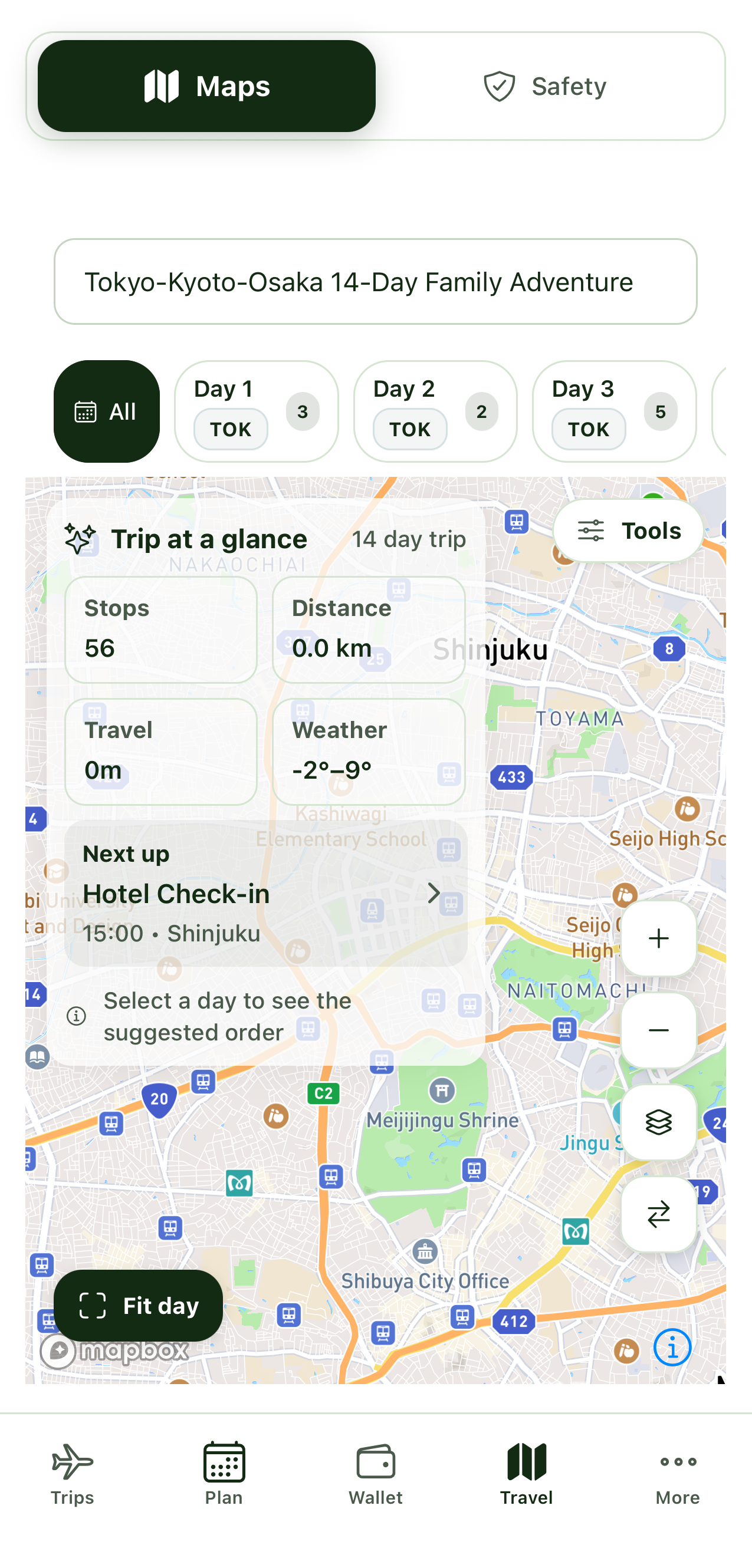
The fix: Make decisions asynchronously and visually. When people can see an itinerary laid out — literally see what each day looks like, where things are on a map — they give better feedback. “I don’t think we need two full days in the same city” is a clearer response than trying to evaluate a bullet-pointed list. Give people something to react to, not something to imagine.
Problem 3: Someone Always Ends Up Doing All the Work
Every group has a planner. They’re the one who books the flights, researches the restaurants, builds the itinerary, sends the reminders, and chases people for payment.
They usually love travel and genuinely want to help. But by the time the trip actually happens, they’re already tired of it — and vaguely resentful that no one else stepped up.
The rest of the group, meanwhile, often doesn’t realize how much work went into it. They weren’t involved in the process, so they don’t see it. And because they weren’t involved, they’re also more likely to casually suggest last-minute changes without understanding the downstream impact.
This dynamic is one of the most common sources of tension in friend group travel. And it’s not a personality problem — it’s a structure problem.
The fix: Distribute the planning, not just the tasks. When everyone has visibility into the plan and can contribute directly — add a restaurant they found, update an activity, drop in a note — the mental load gets shared. The planner stops being the single point of failure. The rest of the group feels more ownership. Both sides get a better trip.
Problem 4: Money Gets Awkward
Few things damage friendships faster than unresolved money in a group trip.
The issues usually stack up quietly:
- Different people pay for different things throughout the trip
- No one’s tracking it in real time
- At the end, someone tries to reconstruct everything from memory and bank statements
- The math doesn’t quite add up
- Someone feels like they paid more than their share
- Nobody wants to say anything because it feels petty
And that’s if it gets resolved at all. Plenty of group trips end with a vague “we’ll sort it later” that never gets sorted.
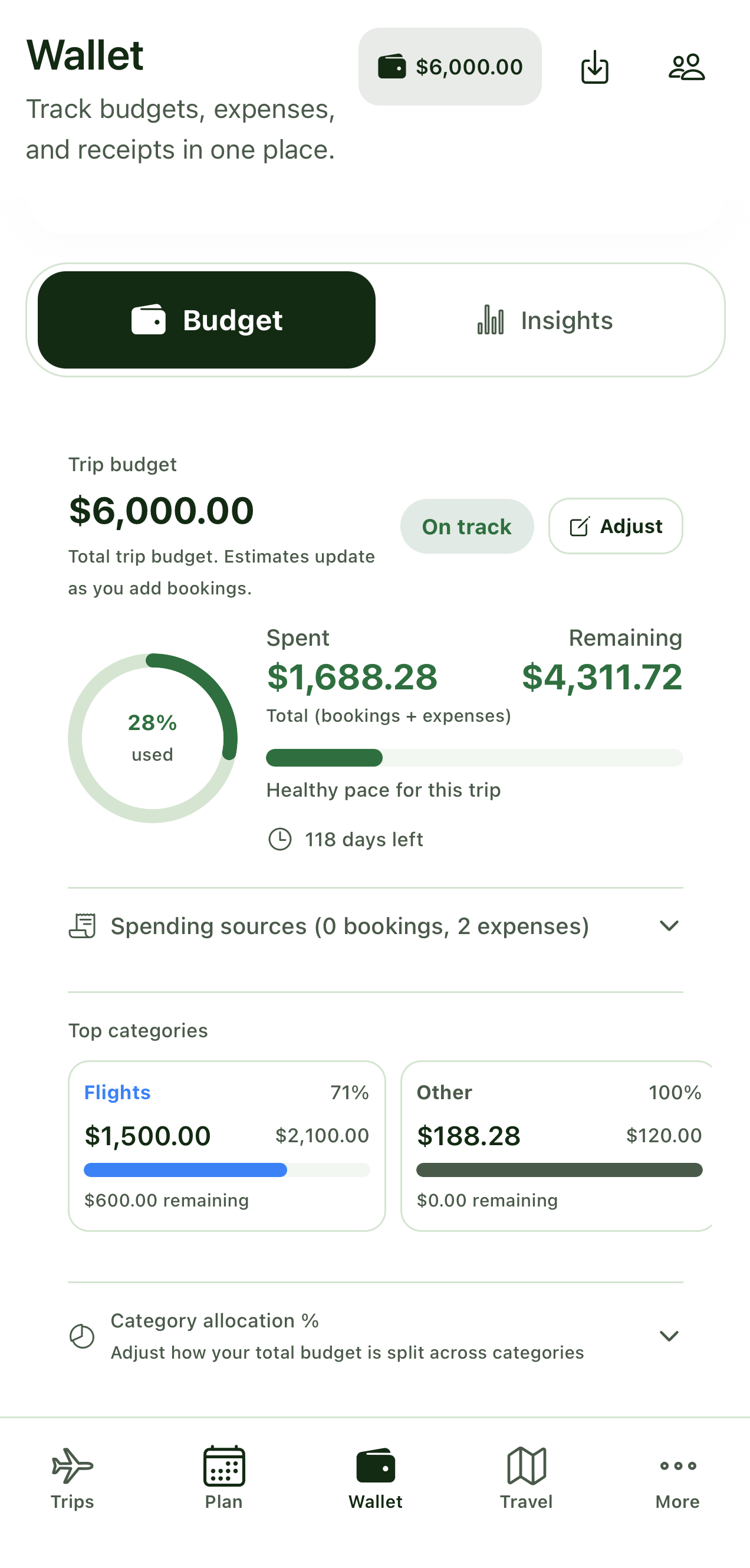
The fix: Track shared expenses as you go, not at the end. When everyone can see what’s been spent, who paid, and what the running balance looks like, the end-of-trip settlement becomes a five-minute exercise instead of a diplomatic crisis. The goal isn’t to be transactional about it — it’s to remove the awkwardness entirely by keeping it transparent from the start.
Problem 5: Real-Time Changes Create Chaos
Things change on trips. Restaurants are closed. Weather shifts plans. Someone gets sick. A local tells you about something you’d never have found otherwise.
When your group is coordinating through a chat thread, any change to the plan creates a cascade of messages. The updated itinerary gets buried. People miss the update. Someone shows up at the original meeting point. Someone else is already at the new one.
The fix: Changes to the plan should live in the plan, not in the chat. When one person updates the itinerary, everyone sees it. No cascade of messages needed. No one gets left behind.
What Good Group Trip Planning Actually Looks Like
Here’s what changes when you get the infrastructure right:
Before the trip: Everyone contributes to the plan rather than waiting for someone to dictate it. The itinerary takes shape collaboratively, decisions happen faster because people can see and react to a concrete plan, and the budget is visible and agreed-upon before anyone books anything.
During the trip: The group chat is for jokes and photos, not logistics. Everyone knows what’s happening and when. Changes get made in the plan, not buried in a thread. Expenses get logged when they happen.
After the trip: The financial settlement takes minutes. The memories are organized. The group is already talking about the next one.
The difference between a stressful group trip and a genuinely great one is rarely the destination. It’s almost always how the planning was handled.
The Tool Problem (And What to Look For)
The reason so many groups fall back on group chats and Google Docs isn’t that those tools are good for trip planning — it’s that they’re familiar. Everyone already has them. The friction of switching to something new feels like extra work.
But Google Docs wasn’t built for shared itineraries. Group chats weren’t built for collaborative planning. The cost of using the wrong tool is paid over weeks of planning and then again during the trip itself.
What a group trip actually needs:
- A shared itinerary everyone can see and edit in real time
- A map view so the plan makes geographic sense
- Expense tracking with group splits built in
- Document storage for bookings, confirmations, and IDs
- A single place where the whole trip lives — not five
That’s exactly what Tripvio was built for. One shared space for the whole group, from the first idea to the last expense. Real-time collaboration so the plan stays current. Expense splitting so money doesn’t get weird. And everything — the itinerary, the map, the docs, the budget — in one place everyone can access.
Group trips are one of the best things you can do with the people you care about. The planning doesn’t have to be the hard part.
Start planning your group trip on Tripvio → tripvio.app